原文:
Serenity 白毛女-中文翻译(公开)
Serenity 白毛女-中文翻译(公开)
原文:
I wanted exposure to DDR2/DDR3 bottleneck ongoing and found ESMT (3006).
A $2.5B MC fabless company with PSMC wafer allocation (esp. focused on DDR2).
Last month's net income was: $109.5M (July month), which annualized is $1.31B net profit (1.9x runrate P/E).
If we look at net profit throughout the months tracking legacy DRAM price hikes:
Jan 2026: ~$16M (est)
Feb 2026: ~$17M
Mar 2026: ~$31M (est)
April 2026: ~$58M
May 2026: ~$60M (est)
June 2026: ~$67M (est)
Jul 2026: ~$110M
(Estimated months are inferred from reported quarterly totals. July is company reported)
This earnings progression reminds me of $SNDK style price hikes + earnings inflection (esp. the report released this month).
And I do expect DDR2/DDR3 capacity to remain constrained throughout 2027 (with legacy players like Winbond withdrawing from certain lines too like DDR2).
It's not quite all inventory liquidation like the other peers. Sure lower cost inventory helped, but the primary driver seems to be the widening spread between wafer costs/supply and legacy dram ASPs?
Their balance sheet is extremely solid as well:
- Cash on hand: ~$395.9M net cash
- $249.6M inventory, $146.3M receivables
And the net income progression... is before further legacy DRAM hikes expected in Q3.
*disclosure own positions, NFA
It's always a bit daunting being early without much commentary around the idea. Wondering if anyone can stress test this thesis?
Since a company that grew monthly net income from $16M -> $100m this year alone (July Annualized would be 1.9x P/E).
And benefits from another projected wave of DDR2/DDR3 hikes this quarter... maybe like 35-40% for DDR2 lines per Trendforce, and DDR3 likely continuing to rise.
Do markets just not know about this bottleneck/company or am I missing something from my research?
翻译:
我想要捕捉 DDR2/DDR3 持续的瓶颈,于是发现了 ESMT(
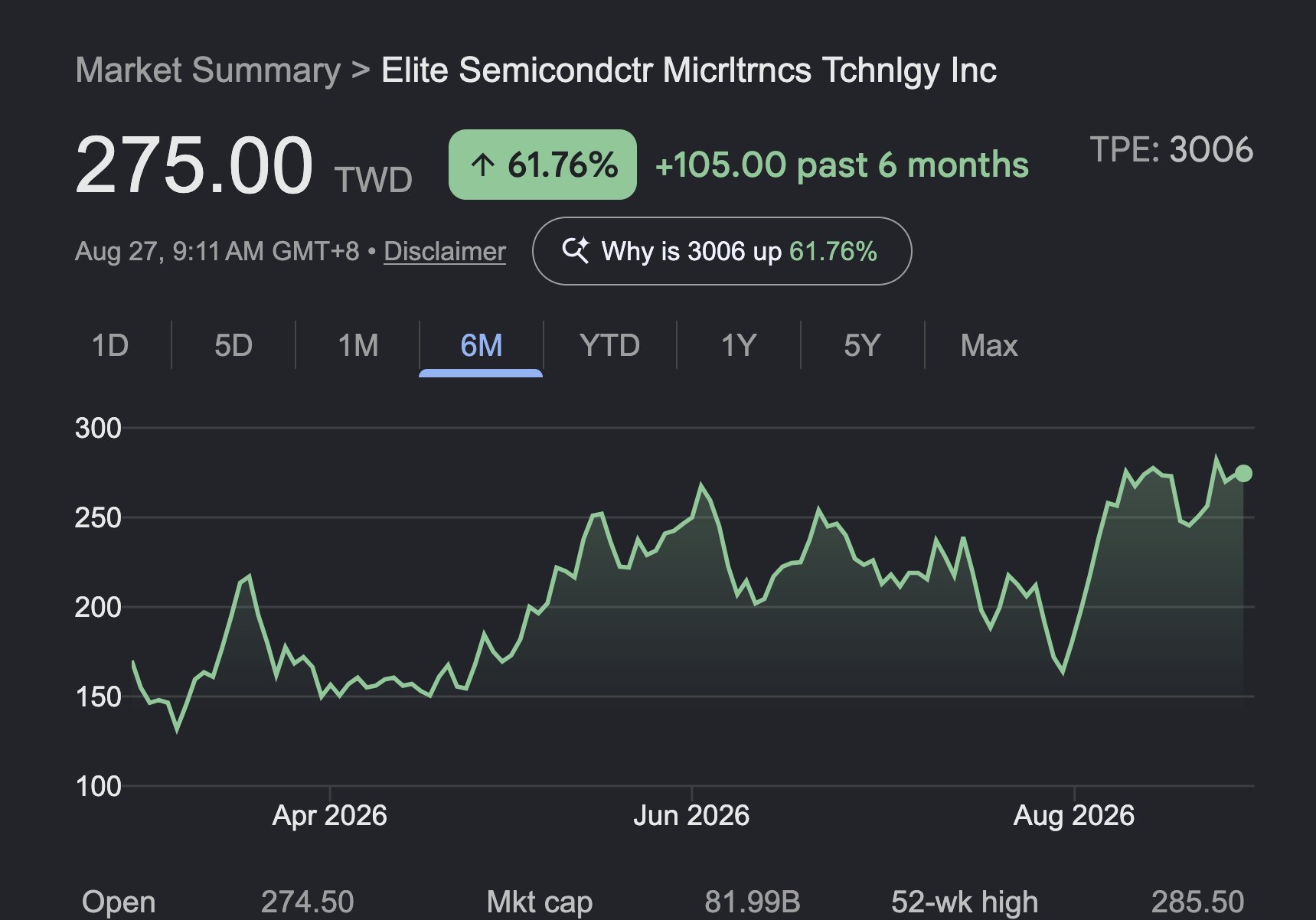
I wanted exposure to DDR2/DDR3 bottleneck ongoing and found ESMT (3006).
A $2.5B MC fabless company with PSMC wafer allocation (esp. focused on DDR2).
Last month's net income was: $109.5M (July month), which annualized is $1.31B net profit (1.9x runrate P/E).
If we look at net profit throughout the months tracking legacy DRAM price hikes:
Jan 2026: ~$16M (est)
Feb 2026: ~$17M
Mar 2026: ~$31M (est)
April 2026: ~$58M
May 2026: ~$60M (est)
June 2026: ~$67M (est)
Jul 2026: ~$110M
(Estimated months are inferred from reported quarterly totals. July is company reported)
This earnings progression reminds me of $SNDK style price hikes + earnings inflection (esp. the report released this month).
And I do expect DDR2/DDR3 capacity to remain constrained throughout 2027 (with legacy players like Winbond withdrawing from certain lines too like DDR2).
It's not quite all inventory liquidation like the other peers. Sure lower cost inventory helped, but the primary driver seems to be the widening spread between wafer costs/supply and legacy dram ASPs?
Their balance sheet is extremely solid as well:
- Cash on hand: ~$395.9M net cash
- $249.6M inventory, $146.3M receivables
And the net income progression... is before further legacy DRAM hikes expected in Q3.
*disclosure own positions, NFA
It's always a bit daunting being early without much commentary around the idea. Wondering if anyone can stress test this thesis?
Since a company that grew monthly net income from $16M -> $100m this year alone (July Annualized would be 1.9x P/E).
And benefits from another projected wave of DDR2/DDR3 hikes this quarter... maybe like 35-40% for DDR2 lines per Trendforce, and DDR3 likely continuing to rise.
Do markets just not know about this bottleneck/company or am I missing something from my research?
翻译:
我想要捕捉 DDR2/DDR3 持续的瓶颈,于是发现了 ESMT(
Could not load this section.